
The transmission light flickers on the dashboard in the middle of a rainstorm. As the tow truck driver gives you the estimate, the number feels like a punch to the gut. It’s a Tuesday, rent is due by Friday, and your bank account is staring back at you with a balance that barely covers a week of groceries. You need cash to fix the car so you can get to work, but your credit score is stuck in the 500s because of a medical bill you couldn’t pay out of state last year.
This isn’t an outlier. It’s just how it is for millions of borrowers facing unexpected financial hurdles. The urgency of the moment often drives people toward the promise of „instant” relief, a term that carries a lot of weight in the lending industry. While a quick fix sounds tempting, understanding how these fast-tracked decisions actually work is the difference between solving a problem and digging a deeper hole.
Speed in lending isn’t magic. It’s usually just a byproduct of data automation and the existing connections between digital platforms and financial institutions. When people need cash quickly, they often look at personal loans for bad credit with instant approval, which are typically offered by online lenders using streamlined application processes. You provide your basic details, and within minutes, you know where you stand.
How Prequalification Differs from a Hard Credit Pull
People caught in a financial pinch often misunderstand „instant approval.” It’s important to distinguish between a definitive loan offer and a prequalification decision. Most modern fintech platforms use a soft credit inquiry to see if you qualify. This lets you check rates of anchor links without causing the damage a formal application would. This soft pull doesn’t show up on your credit report and won’t lower your score.
But prequalification is just the first step. You might get an immediate „yes” or „no” on an interest rate, but that doesn’t guarantee you’ll actually get the money. Once you move to a formal application, the lender will do a hard credit inquiry. This is a formal check that stays on your report and can slightly dip your score. It’s a necessary part of the process if you actually want the money in your hand.
Lenders use these preliminary checks to filter out high-risk applicants before they spend the manual labor time required for deep underwriting. If a network tells you that you don’t qualify, it saves you from the „hard pull” that would have lowered your score further. It works as a defense for both you and the lender. Many users find they can compare several different options through a network without worrying about ruining their credit standing.
The mechanics of these decisions rely on a massive influx of data points processed in milliseconds. They look at:
- Debt-to-income ratio (DTI)
- Employment history and stability
- Recent credit inquiries
- Bank account transaction history via linked accounts
If the data aligns with their risk appetite, you get that „instant” notification. If it doesn’t, you’re left wondering if a different lender would have been more lenient. It’s a high-speed game of matching risk to reward.
The Mechanics of Digital Lending Networks
Most people don’t apply to a single bank and wait three days for an answer anymore. Instead, they use a network. These networks partner with dozens of individual loan providers, acting as a middleman that matches a borrower’s profile with a lender’s specific criteria. This is often the fastest way to find a match because instead of you knocking on fifty doors, the doors all look at you at once. One effective way to do this is through best personal loan networks for bad credit with instant approval, which can provide immediate feedback on your eligibility.
These networks are efficient because they specialize in the „bad credit” niche. Traditional banks often use rigid scoring models that automatically reject anyone below a certain threshold. Online-first lenders, however, are often willing to look at alternative data. They might care less about a single missed payment from two years ago and more about whether your direct deposits have been consistent for the last six months. This shift in underwriting is why „instant” decisions are even possible.
However, speed comes with a trade-off in interest rates. Risk-based pricing is the rule. The faster the money arrives and the more uncertain the lender is about your ability to pay it back, the higher the APR will be. You’re essentially paying a premium for the convenience of not having to visit a local branch. It’s a trade-off of time versus cost that every borrower has to calculate before clicking „accept.”
When evaluating these networks, consider this comparison of lender types:
| Lender Type | Approval Speed | Interest Rates | Credit Impact (Pre-approval) |
|---|---|---|---|
| Traditional Banks | Slow (Days) | Lower | Hard Pull Required |
| Online Networks | Fast (Minutes) | Moderate to High | Soft Pull (Usually) |
| Payday/Short-term | Instant | Extremely High | Variable |
The goal is to find a middle ground where the interest doesn’t become a cycle of debt. It is possible to find a loan that is fast but doesn’t feel like a predatory trap, but you have to look past the „instant” marketing to see the actual math underneath.
Risk Assessment for Extremely Low Credit Scores
There is a big difference between „fair credit” and „extremely bad credit.” If your score is in the 580 to 620 range, you’re likely looking at standard subprime personal loans. These are relatively straightforward and offer the quickest paths to funding. If your score is significantly lower due to bankruptcy, collections, or recent defaults, things change. You might need to look specifically for loans for very bad credit that focus on different verification methods.
Lenders for the „extremely bad” category often require more than just a credit score. They might want to see your bank statements to verify that you actually have the cash flow to make monthly payments. They are looking for stability in your income, even if your history with debt has been messy. This is why „instant” might still require you to spend twenty minutes uploading PDFs of your last two paystubs or linking your bank account through a third-party service.
And you must be incredibly careful with „next-day funding” promises. While some lenders, like TurboDebt, aim for quick cash and fast approval for urgent needs, the speed of the approval doesn’t always equal the speed of the cash in your pocket. There is a gap between the decision and the ACH transfer. Even if a loan is approved instantly, the banking system itself can take 24 to 48 hours to move those funds into your checking account. Always check the „funding timeline” in the fine print.
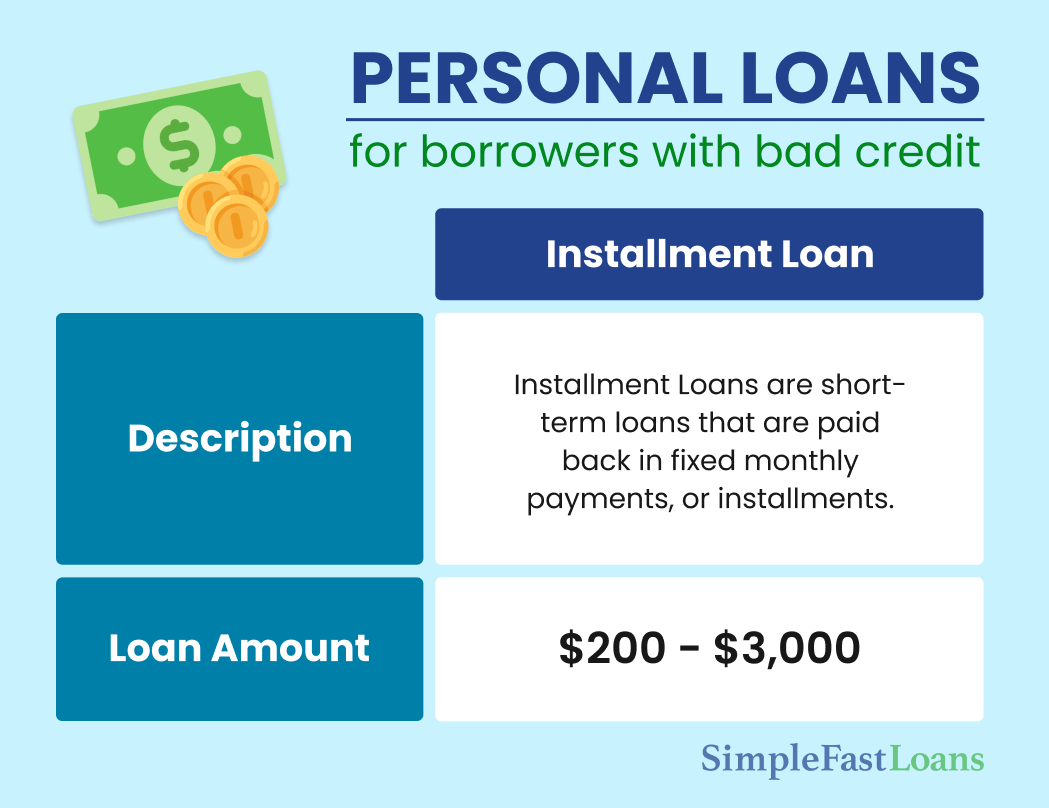
Some lenders offer short-term, revolving options rather than traditional installment loans. An installment loan is a lump sum that you pay back in fixed monthly chunks. A revolving loan is more like a credit card; you have a limit, you spend it, you pay it back, and you can spend it again. For someone with bad credit, an installment loan is often safer because the end date is fixed and the payments are predictable, which helps prevent the „debt spiral” often associated with revolving credit.
When navigating this, keep these three realities in mind:
- The higher the speed, the higher the APR likely is.
- „Instant” usually refers to the decision, not the arrival of funds.
- Alternative data (bank statements) is often required for lower scores.
It’s easy to get swept up in the relief of seeing an „Approved” message on your phone, but that message is just the beginning of the financial commitment. The real work starts when the first payment is due and you realize how much of your future income is already spoken for.
Evaluating the True Cost of Speed
The math of a bad credit loan can be deceptive. If you borrow $2,000 to fix your car today and the interest rate is 36%, you aren’t just paying back $2,000. Over a two-year term, you could end up paying hundreds, if not a thousand, dollars extra in interest. This is the „convenience tax” of the instant-approval world. It is a price many people are willing to pay to avoid a crisis, but you should weigh it against the alternatives, like negotiating a payment plan with the repair shop or seeking help from local non-profits.
Another hidden cost is the origination fee. Many online lenders take a percentage of the loan off the top before you even see the money. If you apply for $5,000 but there is a 5% origination fee, you will only receive $4,750, yet you will owe interest on the full $5,000. This is a common tactic that makes the monthly payment look smaller than it should be relative to the amount of cash you actually received. Always look at the total cost of borrowing, which is the sum of all interest and fees over the life of the loan.
Compare the APR (Annual Percentage Rate) to the simple interest rate. The interest rate is just the cost of the principal, but the APR includes the fees and the impact of compounding. This is the only number that matters when you are comparing two different lenders. A lender might offer a 15% interest rate but a high origination fee, while another offers 18% with zero fees. The second one might actually be cheaper if you plan to pay the loan off early.
Before signing any digital contract, check for these specific clauses:
- Prepayment penalties: Can you pay the loan off early without a fee?
- Late fee structures: What happens if you are one day late?
- Automatic debit authorization: Will they pull the money without asking?
- Variable vs. Fixed rates: Will your payment change next month?
The goal of using an instant-approval loan should be to act as a bridge, not a permanent lifestyle. It is a tool to get you from a point of crisis to a point of stability, but if the bridge is too expensive, you might find yourself stuck in the middle of the water.
The digital evolution of credit is making liquidity more accessible than ever, but it requires a level of financial literacy that the marketing often ignores.
Legutóbbi hozzászólások